Friday, September 1, 2006
How about Charo?
I was absorbed by Charo's presentation. Particularly because we had talked about ready-mades, which she defined as "an opportunity to share," "an experience" (which reminded me of Arte Povera). As if the more difficult the task, the bigger the empowerment. And how about seducing the gods with antennas? Charo is definitely a character. Tell me your thoughts and be frank. This is not a place for edulcoration.
Thursday, August 31, 2006
Art news
Remember The Scream by Munch? The painting has been finally recovered! The masterpiece was stolen two years ago by gunmen who seized it from an Oslo museum (via Artblog.net)
Symbols in art
1- Clouds mean rain, a falling barometer means that a storm is coming, a twister in the sky means an approaching tornado: one is a sign of the other. These relations exist in nature and were discovered, not invented by humans. On the other hand, a bell ringing means the end of class, the word “cat” means a certain species of domesticated quadruped. These relations are conventional. 2- In art, what is it that makes a thing a symbol? It is something represented in the artwork (an object, an action, or a pattern of objects and actions, or just a color) that does the symbolizing? How does A become a symbol of B? 3- The cross is a symbol of Christianity (a conventional token of suffering) but this is a historic and religious convention. On the other hand, the sun seems like a natural symbol of life and strength; a river brings forth the idea of eternal change and flowing, and so forth. In these cases there was no agreement (convention) as to what would stand for what; the relation is too obvious. 4- According to philosopher Nelson Goodman one can virtually make any A to stand for any B, provided one can justify the link -an important premise for an artist. 5- Here are some examples of how virtually anything can be a symbol for something else: animals, parts of the body, abstract characters, artefacts, plants, etc. A circle → the cosmos (in Shamanism); a triangle→ perfection; an ant→ industry; the ape → loyalty and devotion (ancient India); the arch→ the union of earth and sky (ancient Greece); the human beard→ wisdom, strength and virility (Semitic religions); blood→ a tantric image of fertilization (Vedas); ying/yang→ positive, negative (Ancient China); A and ω→ beginning and end (ancient Greece); the dog→ watchful guardian (ancient Egypt); Moby Dick→evil. 6- So, to further problematize the issue: What would Duchamp's Fountain stand for?
Wednesday, August 30, 2006
Update (3 points)
1- We have class tomorrow, same time, same place. 2- Charo Oquet is coming around 7:40pm for a presentation. Oquet co-directs The Edge Zones (http://www.edgezones.org/), one of Miami’s most interesting alternative spaces. Oquet is a good painter, but I particularly like her installations. They stand like discombobulated towers, part trash architecture, part baby-world. Dolls, fake jewelry, trinkets, cheap embroideries, little toys, souvenirs and whatnot jumbled in some bizarre offerings to the gods. 3- Incidentally, I haven't seen much participation (your 120-word comment) -which was already due. Ernesto? Fine, but how about the very possibility of the Internet (look under sociological implications) in cases like this?
Sunday, August 27, 2006
What is art?
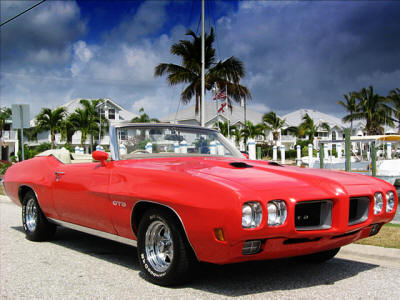
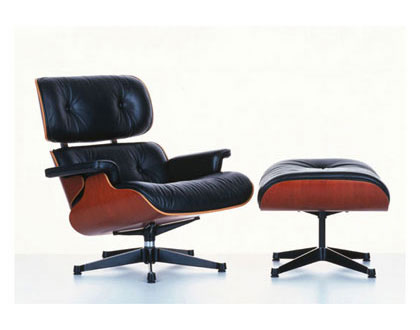
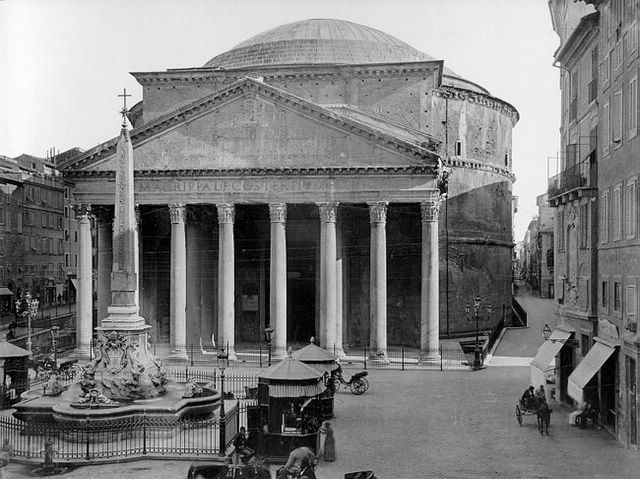
Since definitions aim at setting limits, Dominic made a good point when he said that a work of art “is a man-made thing,” an artifact -as distinguished from an object in nature. A sunset is beautiful, but it's not art. A piece of driftwood may have aesthetic qualities, but it is not a work of art. On the other hand, a piece of wood that has been carved to look like driftwood is not an object of nature, but of art. Is it intention or “purpose” what characterizes art? Even that was challenged by Duchamp’s objets trouvés. Even though “Fountain” is a urinal, it could be that the act of recontextualizing it, i.e. setting it in a different space (re)defines it as art. Could art relate to a kind of heightened interaction with a particular environment? Historian Rhonda Roland Shearer has argued that exhibiting a found object “is already a modification from its natural state” (think of an installation of sea shells inside a gallery entitled “Wisdom”). According to this definition, paintings, sculptures, buildings, furniture, automobiles, ships, etc, can be seen as art. Arthur Danto (well-known critic and philosopher of art) has suggested that “art” should be kept open, as “an evolving concept” (as coincidentally one of you suggested on Wednesday). In addition, you advanced these other functions for “art”: (1) Self-expression (Jason?), (2) A way of presenting problems (Ernie?), (3) A means of human communicaton (visual perhaps? (Michele), (4) Is “art” innate? (Maria) Some of your suggestions point to important themes in aesthetics: (1) is the thesis of Italian philosopher Benedetto Croce in his book The Essence of the Aesthetic, (2) defines the manner of aesthetic investigation for Martin Heidegger in his essay The Origin of the Work of Art. (3) characterizes semiotics as a discipline in the Human Sciences. As per (4) I think of Jung's quote: “Art is a kind of innate drive that seizes a human being and makes him its instrument.” The issue points to an old debate, which still goes on. I side with evolutionary biology. This post addresses our first art issue. Please, find time to respond by (the latest) Tuesday, so we can have an interesting online discussion. Thanks to all for further problematizing existing problems.



Venus of Willendorf (c. 22,000 B.C.): "[Some] have raised the possibility that it was designed to be inserted vaginally."
-lavender-mist.jpg)
Saturday, August 26, 2006
Some artnews
1- Power to the people in China (via Artdaily). 2- Calatrava's Fordham Building could be a masterpiece in a city with many (via WILLisms). 3- How about market trends? It means you've become a commodity. So what? 4- Local art & food (via Critical Miami) 5- The Next Few Hours is the coolest artblog in Miami (Kathleen is doing her MFA at UM and may come to talk to our class in October). 6- Who said there was no "ecological art"? 7- This is a fresh place to think about art. See you later...
Friday, August 25, 2006
In the meantime
Last night was fun. I'll post something more serious later, for now, this is the math genius I talked about last night... as per laid back intense, find it here. Another angle of propaganda art is this anti-holocaust exhibit in Iran. Pretty bizarre.
Thursday, December 15, 2005
Update
I’m in the middle of moving --while reading your papers. To top it off, my email at dada was cancelled (they promised to bring it back tonight). If you sent something, it got returned. When I have some time, I’ll go over a critique. It will address pros and cons of each piece at the exhibit. Au revoir.
Monday, December 12, 2005




Sunday, December 11, 2005
Update: Tonight's Show
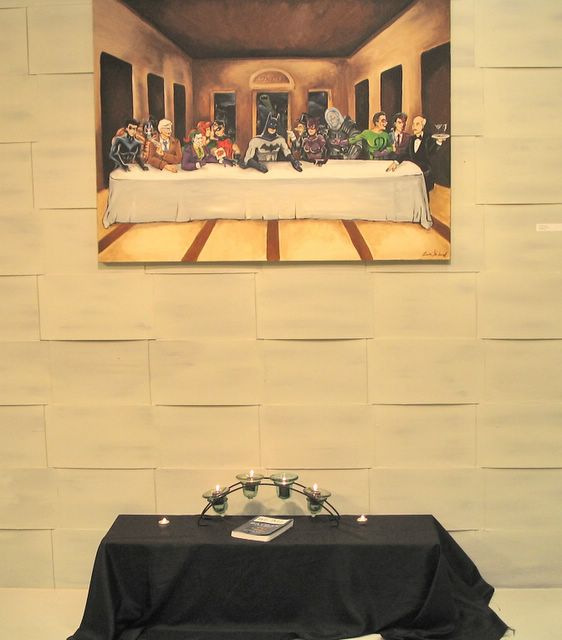
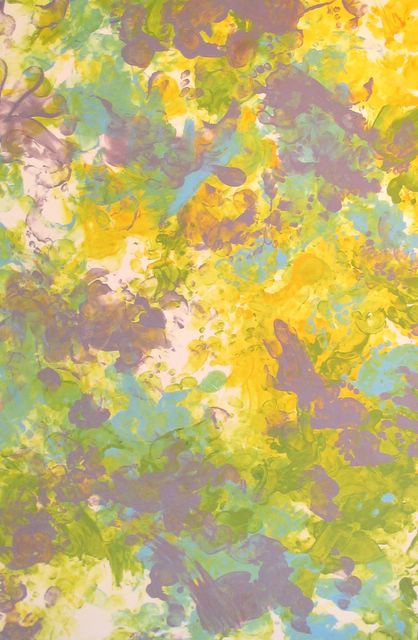
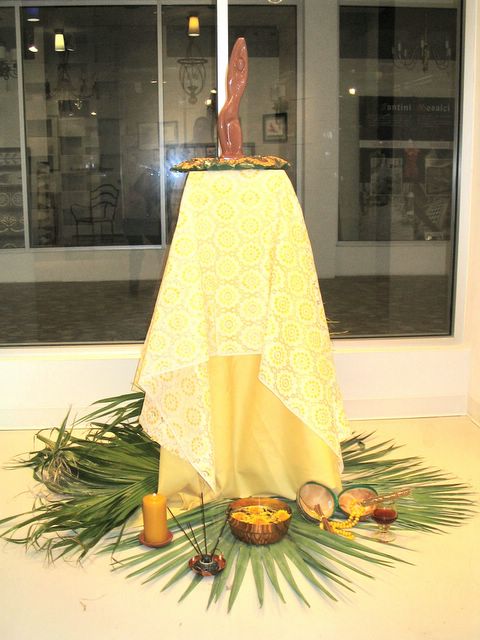
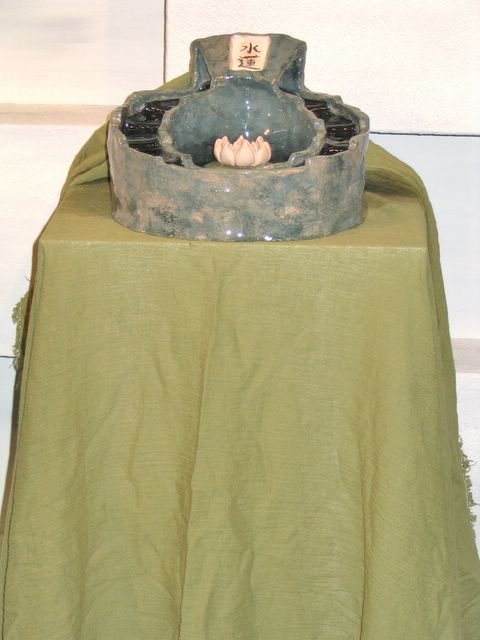
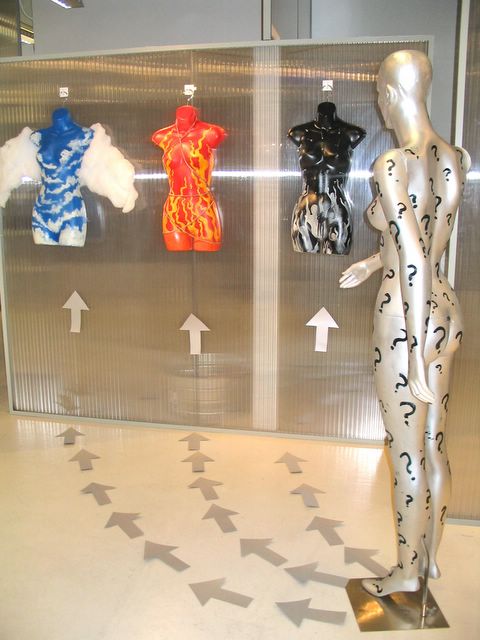
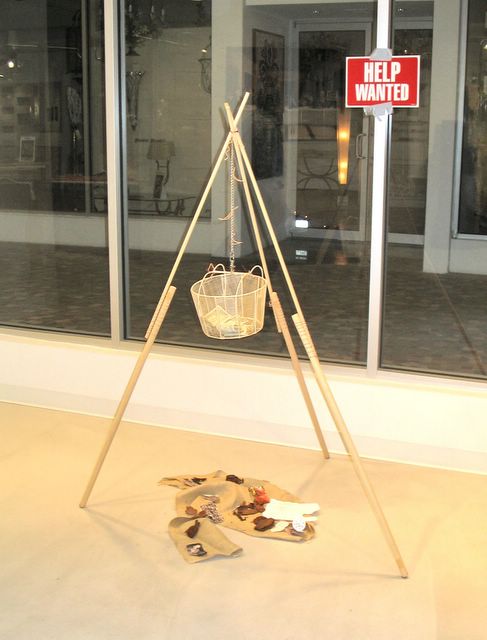
We’re almost done! At 7pm we’ll fix Heidi and Ana’s installations (Sierra is doing a performance). There’s a nice blurb in thenextfewhours about the show. Thanks, Kathleen! Tomorrow we’ll post some pics from the event.
Wednesday, December 7, 2005
Update: Final Show
Securing a space hasn’t been easy. Today, finally I got an email from Tiffany over at Dacra. Craig Robins (the entrepreneur) was kind enough to find a space over at the Buena Vista Building (the building where Carlos de Villasante had his last show). Room #216 is a small but nice space on the second floor. There’s a problem: Because we’re so close to Art Basel, the artists are still dismantling their work. I’ve been told that we may work in the space on --the latest-- Saturday. If that’s the case, we’ll go there Sunday noon and mount our show for that evening. If not, it would have to be on Monday. Not optimal, but it’s the best I can do now. Getting a room at UM has been impossible, even though I’ve sent emails to numerous people, including the Department Chair. They know (for the past six years) that this one-night event is a crucial component in my ART 106 class. Yes, I’m pissed off.
Saturday, December 3, 2005
Update
I’m negotiating a new date for the exhibition. By the way, Liz Cerejido, curator at FIU and a well-known Miami artist will come to our class next Thursday. Hope you’re enjoying Art Basel.
Friday, December 2, 2005
ART BASEL 2
Kids: There's so much to see! My picks for the rest of the weekend are (aside from the AB Convention Center): OMNIART (with a bunch of artists from all over FIU, New World, UM, etc), NADA, which is always a nice alternative, SCOPE (which has been consistently good in precious years). Don't miss Maritza Molina's opening at Tachmes Gallery. There's also CIFO.
See ya!
See ya!
Thursday, December 1, 2005
ART BASEL
This Thursday and through the weekend is ART BASEL. Go out there, find whatever excites you (there's a lot to see). Write me a page of your experiences. We will discuss your findings and opinions next Thursday. Tonight I’m negotiating a space for the show even outside UM (wish me luck). A new lecture post is forthcoming. I'll keep the comments open in case you want to share some interesting discoveries. Ciao!
Sunday, November 20, 2005
FINAL PAPER
The FINAL paper is divided into three sections: Where do I come from? Where am I? Where am I going? Three sections linked by an interrupted narrative; give about one third to each section. The idea comes from Gaugin’s masterpiece (D'où venons nous? Que sommes-nous? Où allons-nous?).
1- Where do I come from? Go back in time and collect those distinctive experiences that have contributed to, and taken you to this point of your life as an artist. Be honest.
2- Where am I? Explore the present. Where are you right now? How do you see your style, what interests you? Are you going in a good direction? Find problems or shortcomings. What do you think you need to change? Be thorough.
3- Where am I going? Look at the future. Based on your personal history what can you expect of yourself? What are your dreams? Try to put yourself in an imagined world of achievements part fulfilled and still part to be realized. Be prudent.
Criterion: The paper should be word processed, handed with no binding. Use Arial font #11, double space. 15 pages for writing credit, 10 pages for regular credit. Deadline: I will collect the paper the last day of classes. No exceptions.
1- Where do I come from? Go back in time and collect those distinctive experiences that have contributed to, and taken you to this point of your life as an artist. Be honest.
2- Where am I? Explore the present. Where are you right now? How do you see your style, what interests you? Are you going in a good direction? Find problems or shortcomings. What do you think you need to change? Be thorough.
3- Where am I going? Look at the future. Based on your personal history what can you expect of yourself? What are your dreams? Try to put yourself in an imagined world of achievements part fulfilled and still part to be realized. Be prudent.
Criterion: The paper should be word processed, handed with no binding. Use Arial font #11, double space. 15 pages for writing credit, 10 pages for regular credit. Deadline: I will collect the paper the last day of classes. No exceptions.
Subscribe to:
Posts (Atom)