Thursday, January 25, 2007


Mies' "Seagram Building": A glass box masterpiece, much imitated, never quite duplicated. What does it stand for? Can a symbol change its meaning through time?
Symbol is context bound. In this still life, for instance, the bread does not represent the body of Christ.


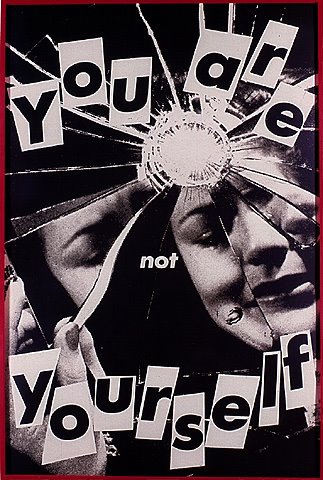
Barbara Kruger's "visual messages" look like spin-offs from advertising and propaganda. They are short, witty, often contradictory, and enough to make us think. A symbol of what?

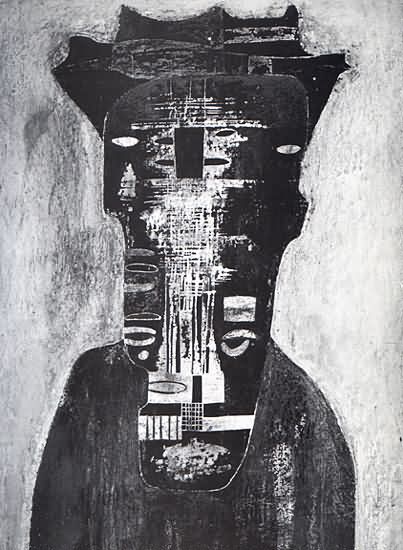
In this painting of Linda Vallejo at the Bronx Museum of Art, entitled "Alpha and Omega" she tries to convey the idea of beginning and end. But none of this is obvious from the painting. Can a title change the meaning of a painting? Why?

Ying/yang is an example of so called "abstract symbols" in art. The outer circle represents "everything", while the black and white shapes within the circle represent the interaction of two energies, called "yin" (black) and "yang" (white), which cause everything to happen. They are not completely black or white, just as things in life are not completely black or white, and they cannot exist without each other. While "yin" would be dark, passive, downward, cold, contracting, and weak, "yang" would be bright, active, upward, hot, expanding, and strong. The shape of the yin and yang sections of the symbol, actually gives you a sense of the continual movement of these two energies, yin to yang and yang to yin, causing everything to happen: just as things expand and contract, and temperature changes from hot to cold. Does the figure express the symbol?

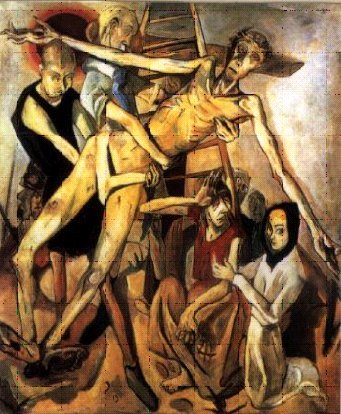
In many other representations of the descent, the cross is clearly visible. Max Beckmann suggests the idea with the shape of Christ's body (with extended arms). Is it fitting?

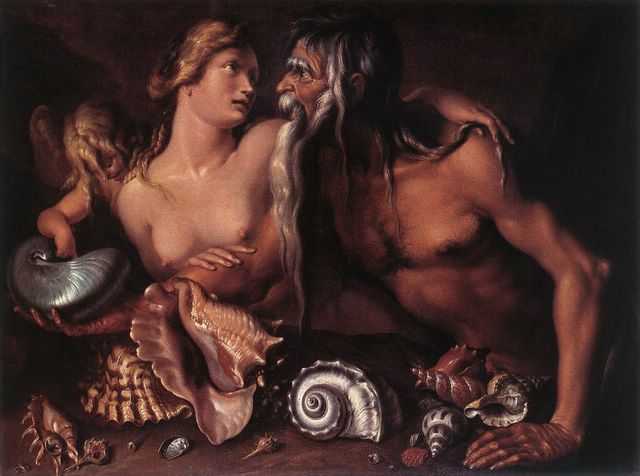
If you didn't know Greek mythology and how it has been rendered in Western art, you wouldn't recognize Poseidon (the god of the seas) in this painting by the dutch painter Jacob de Gheyn.

John Wayne can be seen as a symbol of the American macho. But this is a convention only because of certain roles Wayne played throughout his movie career (exceptional among those is John Ford's The Searchers, a definite masterpiece!)

In many civilizations, the sun stands for life and/or strength. Why? These ancient symbols seem to have strong connections. Is it true that a symbol can be independent of (man-made) conventions?

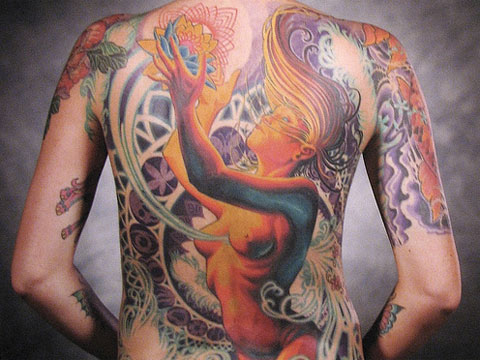
What does this image symbolize?

Friday, January 19, 2007

What's art?

Last night it was a little difficult to post this blog for you to see it in class. But here it is. The title question above remains elusive, but I'd like to have your impressions -based on the pieces posted below. One very general definition is that art is anything man made with a social function. So, painting, sculpture, architecture, printmaking, cave paintings, artifacts (even objects that are prized for their utility, rather than for their purely aesthetic qualities) such as ceramics, glassware, basketry, jewelry, metal ware, furniture, textiles, clothing (and other such goods associated with the decorative arts) are generally considered art. Some don't share this broad view. They assume that art is confined exclusively to artifacts with no particular functional value, such as painting or sculpture. Do you agree? Do you care that what you make is art? Does it matter?

Thursday, January 18, 2007


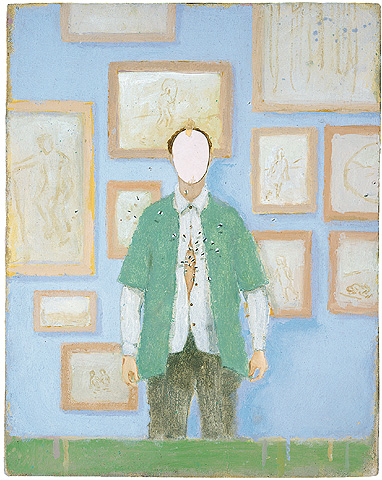
Francis Alys' paintings are enigmatic, naive, like puzzles of everyday life. And I think the paradox lies in that he uses a very simple iconography to throw us off.

Philip-Lorca di Corcia's photos employ a calculated idea of baroque thetricality, to elevate everyday occurrences out of the realm of banality.

Ivan Kafka's works can be labeled installations, but more accurately they are confrontations and dialogues with the surrounding environment. Sometimes the process involves creatively filling a space, at other times it is more a matter of asserting a presence or rearranging particular existing elements. In all cases, however, Kafka transforms landscapes in a way that is striking, yet unobtrusive.

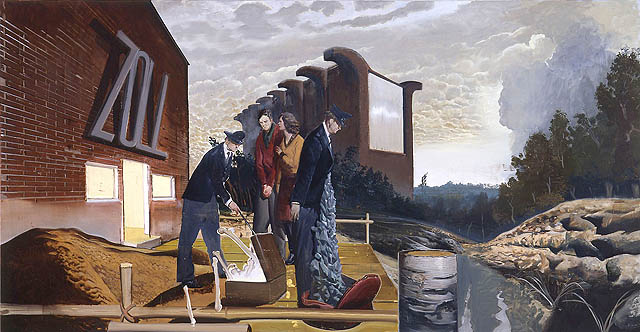
Neo Rauch is an important artist working in new tendencies in painting.In the late 1980's he was one of the most promising painters in East Germany, after the fall of Comunism his art changed. He mixes the old Socialist Realism with environments that look acrid, poisoned. Nature is capable of mutating forms, more in tune with science fiction than paradise. I think his works convey a reality that is bleak and hopeful.

Inside/Outside (1977). Senga Nengudi explores aspects of the human body in relation to ritual and spirituality. She uses water-filled vinyl bags, mud and sand, and generally seeks a spatial and weight balance.
Today's continuing redrawing of the boundaries of art in graffiti art, in signage art, and in the various various forms of appropriation of the art of predecessors reflects our continuing exploration of areas of experience in a complex and rapidly changing world. In my view, recent art reflects a series of strong responses to provocative circumstances with themes of hedonism, humor, pathos, sexuality, compassion and concern, and others, which are presented to middle-class and non-middle-class audiences in a variety of traditional and nontraditional settings, from gallery to street corner to ballpark. Part of the puzzle and challenge in interpreting modern visual art is in the making of connections to what's happening in society as well as to prior art and to the intentions and concerns of the artist. --Marilyn Jahn, Art Journal, Vol. 53, 1994.
Chelsea's XL Bar in New York is outfitted with projectors that fill the XL sky with clouds. Throughout the night the walls and tables change colour. All ambiance, all the time.

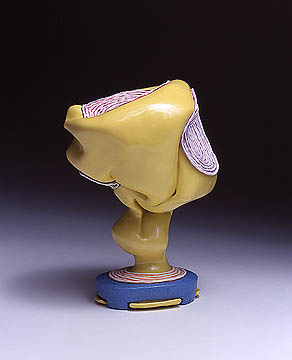
Kathy Butterfly shows us that one can always be fresh with a traditional medium. She has a great skill with clay and glazes but packs tremendous sculptural and technical complexity in tiny fiorms with effusive decorative detail.

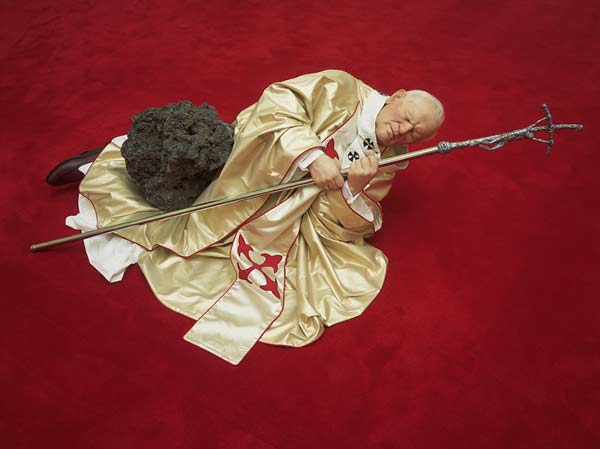
In his pieces, Maurizio Cattelan combines a tragic vision with a subversive humor. In this piece, obviously, the pope has been hit by a meteorite coming from heaven. You make your own conclusions!

ART 106 / ISSUES IN ART MAKING


SYLLABUS

Instructor: Alfredo Triff, Ph.D.
Email: (Given in class)
Phone: 305. 237.7554
Text: Miami Arts Explosion: The New Times Column, by Alfredo Triff + my handouts (See Bibliography).

Introduction

Art106 is a foundational course. It explores important issues in art appreciation, criticism and the sociology of art. The idea is to learn relevant aspects of art theory while looking at and writing about art.

A human activity with different purposes, we can see art as a cultural expression, as a social activity, an economic by-product, a political tool, etc. The nature of today’s art-world is so complex that one cannot properly grasp everything exclusively from a single point of view.We’ll look at the art market (i.e. dealers, auctions houses), media (public opinion, critics and historians) academia (educational institutions, curricula) and the public in general, to which this art is presumably directed. As a rule, the more one takes into account one’s cultural and socio-economic predicaments, the less his or her art becomes an exclusive personal activity.

Art106 is supposed to be a fun course: Frequently, we will visit shows in museums and/or galleries. In addition, I've programmed a series of class presentations with important artists, gallerists, critics and curators from Miami.

Materials and Policy

1- (a) Website reports (weekly, due by Wednesday 12 noon): It requires you to write a minimum 120-word comment per post (35%)
(b) Take home quizzes (based on reading from my book or handouts or excerpts (10%)
(c) Reports on -at least three- local exhibitions (10%)
(e) Final paper (25%)
(f) Attendance & participation=10%

2- Grades A, B and C stand for outstanding, good and average respectively. D is below average.

3- One non-excused absence is permitted. Each absence thereafter will need a doctor’s note. If not, it may lower the participation grade. Missing a quiz must be justified by a doctor’s note or the equivalent. Please, feel free to contact me if you have a serious problem with, or in the class.

(Tentative) Schedule of Classes

January 18: General outline of ART 106. Issue #1: What is art? Open discussion.

January 25: Issue #2: Symbols in art (The aesthetic recipient, the aesthetic object and aesthetic experience. The role of the imagination: Emotion, response and enjoyment).
Invited guest: Omar Summereyns

February 1: Issue #3: Art & Politics (Propaganda)
Invited guest: Beatriz Monteavaro

Feburary 8: Issue #4: Commercial Art (Advertisement)
Invited guest: Jordan Massengale

February 15: Issue #5: Conceptual art
Invited Guest:

February 22: Issue #6: Art & Sex (Pornography)
Invited Guest:

March 1: Issue #6: Art & The Body (Feminism, Self-destruction, the sacred body, Robots, etc)
Invited Guest:


March 8: Issue#7: Art & Spirituality (The Shaman)
Invited Guest:

March 15: Issue#8: Blasphemy (Piss Christ & Mohammed’s caricatures)
Invited guest:


March 22: Issue#9: Art & Media (Video, photography, film)
Invited guest:


March 29: Issue #10: Art & Culture 1- Folk-art; 2- Artisan culture; 3- Clerical culture; 4- Ecstatic culture; 5- Genius culture; 6- Professional culture; 10- Applied arts culture; 11- Mass-art; 12- Avant-garde; 13- Totalitarian culture.

April 5: Issue #11: Functions of art
Invited Guest:

April 12: Issue #12: The Art Market
Invited Guest:

April 19: Issue #13: Style in Art
Invited Guest:

April 26: Final Papers Due

________________________

Bibliography for my handouts

Design

Paul Klee, Paths of the Study of Nature. John Dewey, Art as Experience, (Minton Balch & Co.: New York, 1934). Walter Gropius, The New Architecture of the Bauhaus (New York: New York Museum of Modern Art, Faber & Faber, 1936). Wassily Kandinsky, On the Spiritual in Art (New York: Solomon Guggenheim Foundation, 1946) J.C. Feldster, Design Fundamentals (New York: Pitman Publishing Corporation, 1950). Lewis Mumford, Art and Techniques (New York: Columbia University Press, 1952). Rudolph Arheim, Art and Visual Perception: A Psychology of the Creative Eye (Los Angeles: University of California Press, 1954). Johannes Itten, Design and Form: The Basic Course at the Bauhaus, rev. ed. (1975; originally published in German, 1963). A Grammar of Color: A Basic Treatise on the Color System by Albert H. Munsell (1969); The influence of photography on painting is examined in Aaron Scharf, Art and Photography (1968, reissued 1974).

Aesthetics

Two good compilations are, Joseph Margolis (ed.), Philosophy Looks at the Arts, 3rd ed. (1987). John Hospers, Introductory Readings in Aesthetics (1969); and Harold Osborne (ed.), Aesthetics (1972), which contains a particularly useful bibliography. More recent collections include Richard Shusterman (ed.), Analytic Aesthetics (1989); and Philip Alperson (ed.), The Philosophy of the Visual Arts (1992). Monroe C. Beardsley, Aesthetics: Problems in the Philosophy of Criticism, 2nd ed. (1981), provides a broad, scholarly overview of the subject; while Richard Wollheim, Art and Its Objects, 2nd ed. (1980, reissued 1992), is more narrow. A comprehensive survey is also attempted in David E. Cooper (ed.), A Companion to Aesthetics (1992). For the definition of aesthetics, the above texts are relevant, as are Roger Scruton, The Aesthetics of Architecture (1979); Paul Ziff; George Dickie, Aesthetics: An Introduction (1971) and Nicholas Wolterstorff, Works and Worlds of Art (1980).The first approach to the subject as addressed in the article is exemplified in John Casey, The Language of Criticism (1966); the second in Roger Scruton, Art and Imagination (1974, reissued 1982); and the third in Wollheim's book (above). The aesthetic object is dealt with in considerable detail by Roman Ingarden, The Literary Work of Art (1973; originally published in German, 1931); and Mikel Dufrenne, The Phenomenology of Aesthetic Experience (1973; originally published in French, 1953). In addition to the works already cited, the following are particularly important discussions of paradoxes: Ludwig Wittgenstein, Lectures & Conversations on Aesthetics, and Psychology and Religious Belief, ed. by Cyril Barrett (1966).

Saturday, December 23, 2006

Update

Some interesting articles in the NYT. $68 million sale price for Thomas Eakins's The Gross Clinic. Are you ready for another fair? It's called "a great amalgamation of interests." This is an artist definitely worth checking out. In case I don't post anything else (not necessarily partying, just a bunch of deadlines to meet). Merry Christmas!

Friday, December 8, 2006

More Basel!

More Basel! My introduction article for the Sunpost, plus articles from Omar Sommereyns and Michelle Weinberg.

Thursday, December 7, 2006

One more Basel map

Check out this map via Sunpost!

Wednesday, December 6, 2006

Art Basel Miami Beach

This year's ABMB comes with a ripple effect of 12 other fairs. There’s a lot to see. Here are some of my recommendations... (wait! first, get a map: This is a good one (via Critical Miami): 1- Scope Miami is a solid fair with great galleries from all over the world. Don't miss NADA with some heavy duties. 2- Design Miami 06 (in its second installment) is already one best design fairs in the world (check out Zaha Hadid’s panel. Hadid, my favorite architect, won the Pritzker Prize in 2004). 3- In the middle of everything there’s some some goofy stuff. 4- Love photography? Go to PhotoMiami (there are some Miami galleries represented). 5- Go local, all over the Design District and Wynwood: Ingalls, Snitzer, Bruk, Dorsch, The Moore Space, etc. 6- Artnet has a good take on different events. 7- If you're interested in photo and video (particularly about architecture) CIFO is a good option (their parties are really cool). 8- Other sites with detailed suggestions and links are: The Next Few Hours and Alex in the City. Don't stay home. Go, go!

Friday, December 1, 2006

(post)Installation art

Let’s see (post)installation art as entertainment, interior design, architecture, tableau vivant, hyperreality and interactive theater all at once! Who would’ve imagined that space and observer could become part of the art experience? We crave new experiences. A painting alone is Ok, but it’s not enough for our ephemeral compressed time. Too oppressively flat. Only if one could bring art into a vortex of n dimensions. How about multiplying the observer’s viewpoint so that the observer is observed by him/her? Art for time/space and string theory. There’s always a relationship between void and mass. Art is about producing illusion, whether as a flat rectangle -as in painting- or as sculpture. Ancient pyramids are huge geometric solids (there’s no division between Amun and the Pharaoh). Athens’ Parthenon brings forth the idea of order, symmetry and scale in function of the citizen. Fast-forward 500 years to Rome’s Pantheon; we find a redefinition of the space (private/public) in the stability and permanence of the empire. In Romanesque architecture the inside means worship and domesticity, serfdom, while the outside remains dangerous (thus the fortress). Modern science redefines our relationship with space. With the invention of the elevator, buildings can go up dozens of stories. The car (a little room on wheels) takes our intimate living outside. With quantum mechanics, space becomes non-Euclidean. 20th-century art erases the boundaries between object/subject, inside/outside, private/public with Kurt Schwitters’ Merzbau, Duchamp’s ready-mades, the vast canvases of Pollock, Newman and Still, Frank Stella’s shaped canvases (which broke the hegemony of the rectangle), Sol Lewitt’s wall drawings, Carl Andre’s flat sculptures, Smithson’s Earth works, Kaprow’s happenings, Claes Oldenburg’s The Store, and the tableaux of Segal, Kienholz and Tom Wasselmann. Today, buildings look sculptural (Gehry's Guggenheim Museum), while interiors are designed as exteriors (Zaha Hadid)

Thursday, November 30, 2006


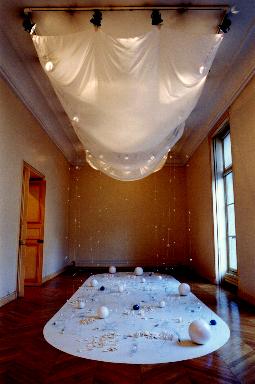
As the boundaries between urban and suburban become blurred, the city resembles more a landscape (or topography), rather than a volume. Installation art opens the possibility of exploring the limits of corporality and gregariousness.


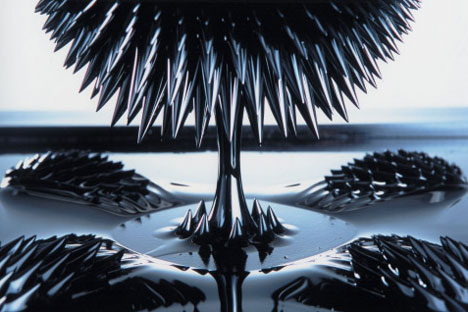
Sachiko Kodama uses magnetic fluid to combine with dynamic, organic shapes in order to represent human emotion via pulsating liquids.


Let's design chaos and fashion our personal disorders
On Screens
With Cybernetic Tools
From Countercultural Perspectives
With Informational Chemicals (Chaos Drugs)
While DeLighting in CybErotics
As Guerrilla Artists
To Explore De-Animation Alternatives
While Surfing the Waves of Millennium Madness
to glimpse the glorious wild impossibilities and improbabilities of the century to come. Enjoy it ! It's ours to be played with. – Timothy Leery, The Eternal Philosophy of Chaos.


One can see spaces as ad lib, impromptu; suited for a life of diversity. Space -not as static, but- as a mutating force.


According to Robert Bone, The Catacombs are a metaphor for new theories of information processing. New technologies are inclusive rather than exclusionary, expansive rather than reductive, circular rather than linear, ultimately egalitarian and lifeaffirming rather than hierarchical and domineering.

Saturday, November 18, 2006

Update

After I realized that we only have one more class to go, I decided to change my tune. Below, find a new focus for this week's issue. It's a sort of mix of different topics we've touched upon in class; from public art, pornography, art economics, pop culture and Feminism, to art as therapy, culture and art & society. Next week is Thanksgiving: Happy turkey to you all!