Thursday, February 1, 2007


Stalingrad! (1943) The poster illustrates the defeat of the Germans at the Battle of Stalingrad, a turning point in the German war in the easter front.


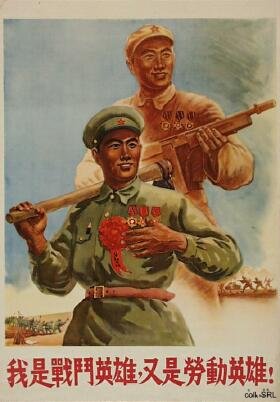
Chinese posters served to inform of Land Reform policies and to publicize new rules and regulations, such as the Marriage Law; rectification movements of intellectuals; campaigns to weed out corruption, bureaucratism and petty crime; and movements to boost popular support for the new regime, in particular in the cities. All the people were mobilized to help reconstruct the country in whatever manner possible (see how important the color red is).

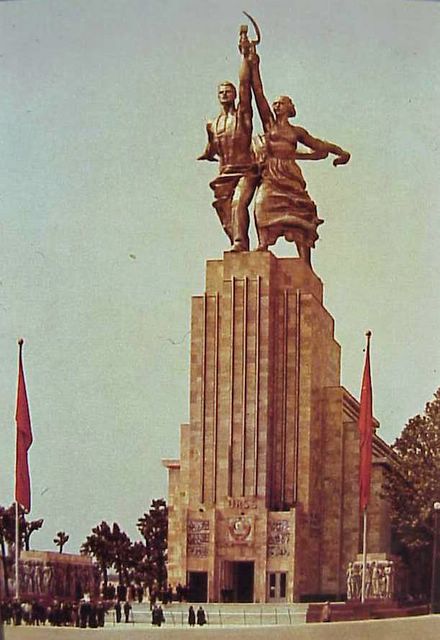
Soviet pavillion (Paris Expo, 1937) Boris Iofan, architect. Of course, Iofan is no Speer. The similarity between the two monuments has to do with how Neo-Classicism becomes a style that can easily define totalitarian regimes. Stalin's love for Neo-Classical architecture (see this link) harks back to (irony of ironies!) a New York building designed by McKim, Mead & White.


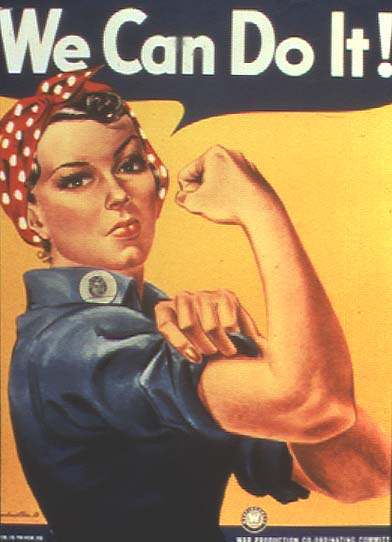
We Can Do It. An American poster by J. Howard Miller (circa 1944). From 1941-45, women were asked to join forces for the war effort. They proved to be as efficient as men at working in the factories. This poster hints at equality: A young woman wearing a factory uniform, rolls up her sleeves while flexing her biceps -a typical male gesture of vigor.

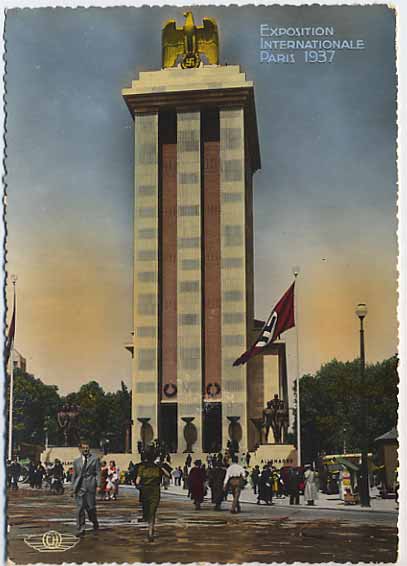
German Pavillion (Paris Expo, 1937). Albert Speer, architect. Even in spite of its short reign (1933-1945) was there a Nazi architecture?


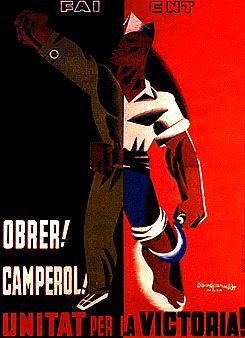
Worker, Farmer, Unite for Victory! (Spanish poster, 1937).
This clip is taken from Leni Riefenstahl's famous propaganda movie "Triumph des Willens" (1935). French writer Georges Bataille wrote about the "aesthetic power" of these highly manipulated Nazi public demonstrations, which appeared as sacred symbols (one can tell the amount of detailed planning of choreography and mis-en-scene behind them). Hitler would say: "The receptive powers of the masses are very limited, and their understanding is feeble. All effective propaganda must be confined to a few bare essentials and these must be expressed as far as possible in stereotyped formulas. These slogans should be persistently repeated until the very last individual has come to grasp the idea that has been put forward…" (Doesn't it sound a bit like modern advertisement?). Trumph of the Will is widely regarded as one of the most effective pieces of propaganda ever produced. A masterful, epic, innovative work of documentary filmmaking, commissioned by the Nazi party and widely used to support Hitler's cause before the war. The film was a rousing success in Europe, but widely banned in America.


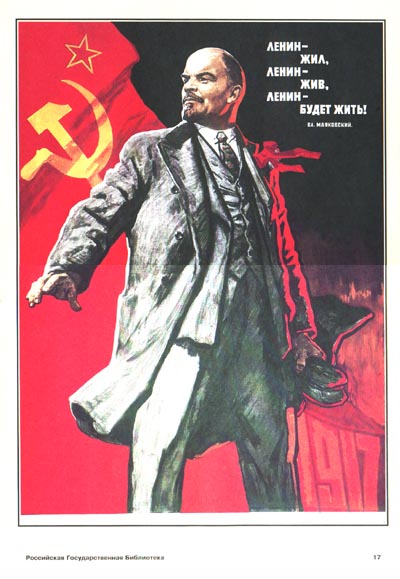
Lenin was, Lenin is, Lenin will live! (Soviet poster, 1940's). Lenin is the father of the Bolshevik Revolution. This poster uses his image to legitimize the Soviet offensive against the Germans under the Stalin regime.


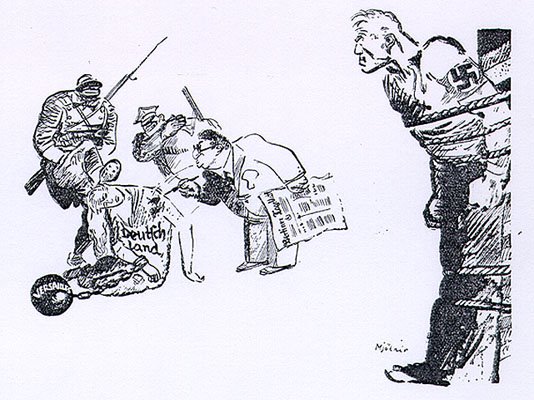
Nazi propaganda before 1933. A tied-up Nazi watches while a Jew reading the Berliner Tageblatt, which the Nazis accused of being a Jewish paper, mistreats a Germany chained to the Treaty of Versailles. The Jew is probably supposed to be a journalist, since he is smearing Gemany with his pen. A Black French colonial soldier and another figure (either a policeman or a Polish soldier) assist.

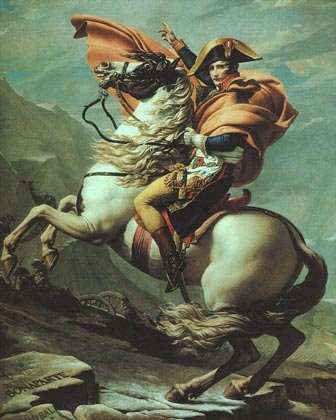
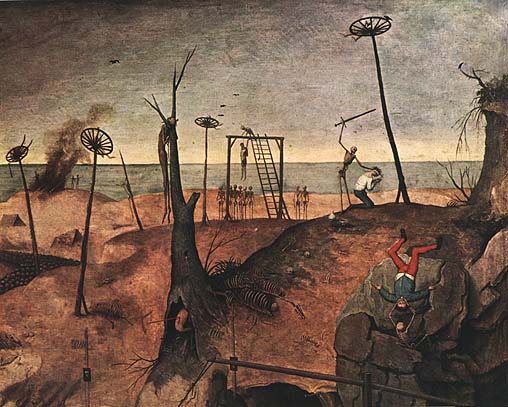
An early form of propaganda

Napoleon Crossing the Alps (by Jacques-Louis David). This epic painting is a form of early propaganda. With it, David idealized and legitimized Napoleon's Italian Campaign of 1796. After Napoleon's fall, David's work lost its social and political influence.

Peter Brueghel's Triumph of Death. According to 15th Century Treatise Ars Memorandi, "If you want to educate with images, choose the most frightful ones."

Thursday, January 25, 2007


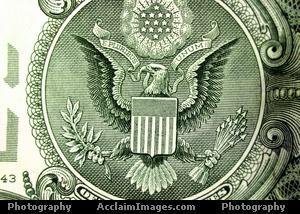
The eagle is more "natural" in its conveying the quality of strength, but in addition, the symbol here points to "value" and "buying power."

Symbols in art

1- Clouds mean rain, a falling barometer means that a storm is coming, a twister in the sky means an approaching tornado: one is a sign of the other. These relations exist in nature and were discovered, not invented by humans. On the other hand, a bell ringing means the end of class, the word “cat” means a certain species of domesticated quadruped. These relations are conventional. 2- In art, what is it that makes a thing a symbol? It is something represented in the artwork (an object, an action, or a pattern of objects and actions, or just a color) that does the symbolizing? How does A become a symbol of B? 3- The cross is a symbol of Christianity (a conventional token of suffering) but this is a historic and religious convention. Though used as the main symbol of nazism, the swastika is considered sacred in Hinduism, Buddhism and Jainism. Who owns the symbol? The sun seems like a natural symbol of life and strength; a river brings forth the idea of eternal change and flowing, and so forth. In these cases there was no agreement (convention) as to what would stand for what; the relation is too obvious. 4- According to philosopher Nelson Goodman one can virtually make any A to stand for any B, provided one can justify the link -an important premise for an artist. 5- Here are some examples of how virtually anything can be a symbol for something else: animals, parts of the body, abstract characters, artefacts, plants, etc. A circle → the cosmos (in Shamanism); a triangle→ perfection; an ant→ industry; the ape → loyalty and devotion (ancient India); the arch→ the union of earth and sky (ancient Greece); the human beard→ wisdom, strength and virility (Semitic religions); blood→ a tantric image of fertilization (Vedas); ying/yang→ positive, negative (Ancient China); A and ω→ beginning and end (ancient Greece); the dog→ watchful guardian (ancient Egypt); Moby Dick→evil. 6- So, to further problematize the issue: What would Duchamp's Fountain stand for?

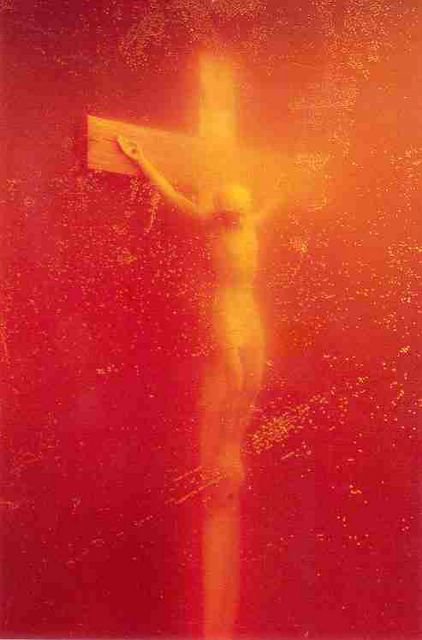
For some Andres Serrano's "Piss Christ" has become the opposite of the original image. But would it matter if you didn't know the controversy?

The skull depicted in this painting by Dürer may count as more "natural" than "conventional" because of the obvious reference that the symbol has with mortality.


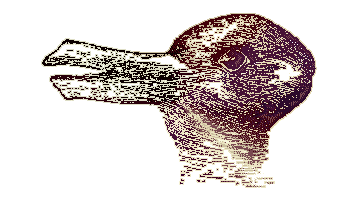
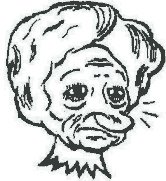
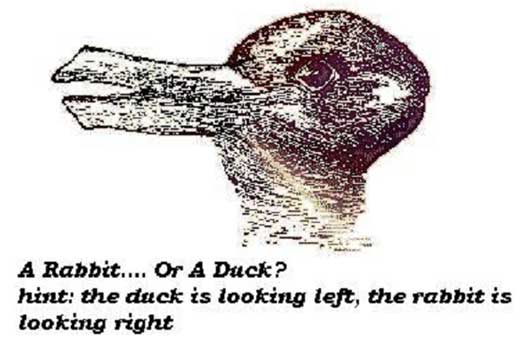
Both these images are pretty vague. On the left, the superimposition of two faces (a young woman over an old lady). On the right, Wittgenstein's famous Duck/Rabbit. Both point to so called psychological illusions.


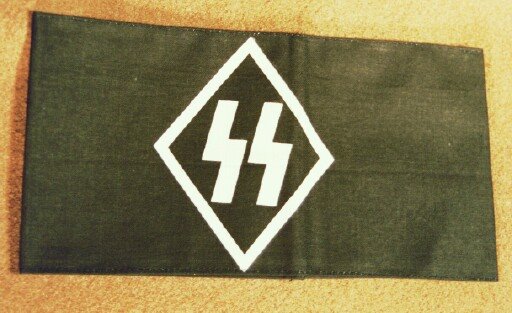
The meaning of the double SS (Schutzstaffel) in the context of the 20th Century is all too clear. However, the symbol is conventional. Is it possible to imagine the same token having a different meaning in the future?

Mies' "Seagram Building": A glass box masterpiece, much imitated, never quite duplicated. What does it stand for? Can a symbol change its meaning through time?

Symbol is context bound. In this still life, for instance, the bread does not represent the body of Christ.


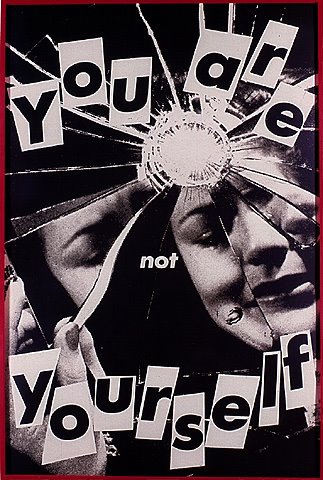
Barbara Kruger's "visual messages" look like spin-offs from advertising and propaganda. They are short, witty, often contradictory, and enough to make us think. A symbol of what?

In this painting of Linda Vallejo at the Bronx Museum of Art, entitled "Alpha and Omega" she tries to convey the idea of beginning and end. But none of this is obvious from the painting. Can a title change the meaning of a painting? Why?

Ying/yang is an example of so called "abstract symbols" in art. The outer circle represents "everything", while the black and white shapes within the circle represent the interaction of two energies, called "yin" (black) and "yang" (white), which cause everything to happen. They are not completely black or white, just as things in life are not completely black or white, and they cannot exist without each other. While "yin" would be dark, passive, downward, cold, contracting, and weak, "yang" would be bright, active, upward, hot, expanding, and strong. The shape of the yin and yang sections of the symbol, actually gives you a sense of the continual movement of these two energies, yin to yang and yang to yin, causing everything to happen: just as things expand and contract, and temperature changes from hot to cold. Does the figure express the symbol?

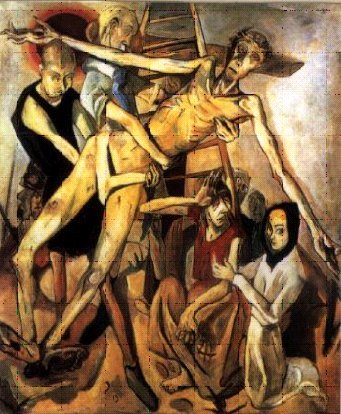
In many other representations of the descent, the cross is clearly visible. Max Beckmann suggests the idea with the shape of Christ's body (with extended arms). Is it fitting?

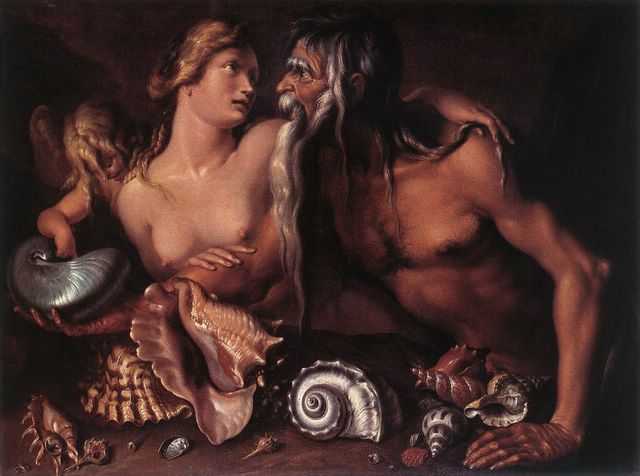
If you didn't know Greek mythology and how it has been rendered in Western art, you wouldn't recognize Poseidon (the god of the seas) in this painting by the dutch painter Jacob de Gheyn.

John Wayne can be seen as a symbol of the American macho. But this is a convention only because of certain roles Wayne played throughout his movie career (exceptional among those is John Ford's The Searchers, a definite masterpiece!)

In many civilizations, the sun stands for life and/or strength. Why? These ancient symbols seem to have strong connections. Is it true that a symbol can be independent of (man-made) conventions?

What does this image symbolize?

Friday, January 19, 2007

What's art?

Last night it was a little difficult to post this blog for you to see it in class. But here it is. The title question above remains elusive, but I'd like to have your impressions -based on the pieces posted below. One very general definition is that art is anything man made with a social function. So, painting, sculpture, architecture, printmaking, cave paintings, artifacts (even objects that are prized for their utility, rather than for their purely aesthetic qualities) such as ceramics, glassware, basketry, jewelry, metal ware, furniture, textiles, clothing (and other such goods associated with the decorative arts) are generally considered art. Some don't share this broad view. They assume that art is confined exclusively to artifacts with no particular functional value, such as painting or sculpture. Do you agree? Do you care that what you make is art? Does it matter?

Thursday, January 18, 2007


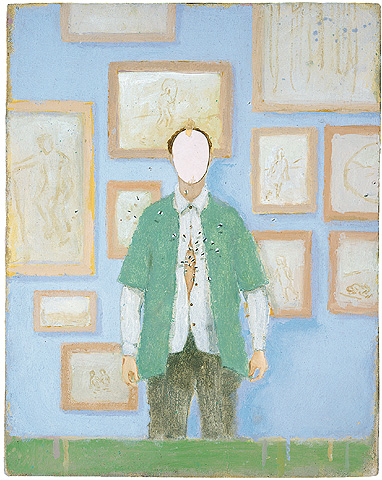
Francis Alys' paintings are enigmatic, naive, like puzzles of everyday life. And I think the paradox lies in that he uses a very simple iconography to throw us off.

Philip-Lorca di Corcia's photos employ a calculated idea of baroque thetricality, to elevate everyday occurrences out of the realm of banality.

Ivan Kafka's works can be labeled installations, but more accurately they are confrontations and dialogues with the surrounding environment. Sometimes the process involves creatively filling a space, at other times it is more a matter of asserting a presence or rearranging particular existing elements. In all cases, however, Kafka transforms landscapes in a way that is striking, yet unobtrusive.

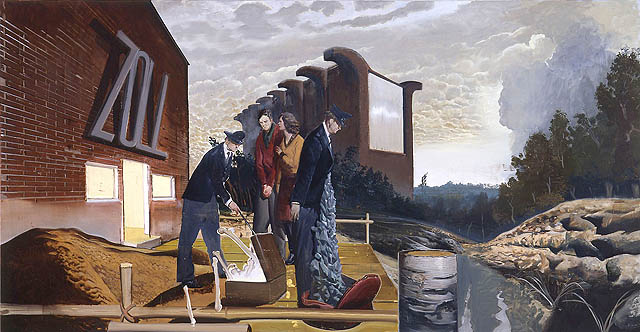
Neo Rauch is an important artist working in new tendencies in painting.In the late 1980's he was one of the most promising painters in East Germany, after the fall of Comunism his art changed. He mixes the old Socialist Realism with environments that look acrid, poisoned. Nature is capable of mutating forms, more in tune with science fiction than paradise. I think his works convey a reality that is bleak and hopeful.