
Tuesday, December 4, 2007
Monday, December 3, 2007


 Other famous logos: Rob Janoff for Apple; the McDonald's logo created by Jim Schindler in 1962 (to look like new arch shaped signs on the sides of the restaurants). Above, the current official Microsoft logo created by Scott Baker (1987) and Nike, originally developed by Carolyn Davidson in 1971 (She was one of 35 people who made suggestions as to what logo to use for the organization).
 Monday, November 26, 2007
Tuesday, November 20, 2007
Monday, November 12, 2007
Perhaps the most famous and influential of all silent films, Metropolis had for 75 years been seen only in shortened or truncated versions. Now, restored in Germany with state-of-the-art digital technology, under the supervision of the Murnau Foundation, and with the original 1927 orchestral score by Gottfried Huppertz added, Metropolis can be appreciated in its full glory. It is, as A. O. Scott of The New York Times declared, "A fever dream of the future. At last we have the movie every would-be cinematic visionary has been trying to make since 1927." Metropolis takes place in 2026, when the populace is divided between workers who must live in the dark underground and the rich who enjoy a futuristic city of splendor. The tense balance of these two societies is realized through images that are among the most famous of the 20th century, many of which presage such sci-fi landmarks as 2001: A Space Odyssey and Blade Runner. Lavish and spectacular, with elaborate sets and modern science fiction style, Metropolis stands today as the crowning achievement of the German silent cinema (taken from www.kino.com/metropolis).
Wednesday, November 7, 2007
An excerpt from a Guy Maddin's Tales from the Gimli Hospital (1988). Over the course of a career that has spanned nearly two decades and 25 films, both short and feature, filmmaker Guy Maddin has provided his viewers with more than their fair share of unique, cinematic moments. To provide just one example, in Tales, his first feature film, the audience is allowed to watch as one of the director's many eccentric characters, a male who is attempting to make himself more attractive to the ladies relaxing on a nearby beach, disappears behind a dilapidated building, troubled that his hair is dry and in such a mess. At this point, the audience may expect that some grooming is in order, but most first time viewers could never predict how such a grooming process will eventually unfold. Out of sight from the women, the character manages to find a shiny, dead fish, which he then squeezes frantically over his head, until its guts are wretched open, spilling fish oil all over the man's hair. The character soon reemerges, hair slicked back and full of fish oil. He is now ready to properly swoon the ladies still lying on the sands of Gimli beach (Senses of Cinema).
Excerpt from Japanese filmmaker Takashi Miike's 2003 film Gozu.
________
MS: You recently went to Cannes with "Gozu." Was the atmosphere different from the other festivals you've attended?
TM: "Gozu" was in the Directors' Fortnight section -- it's not the same as being in the competition. Within the larger festival I was able to find a time and place that suited my film -- a weekend evening screening. I also got a good reaction from the audience. They laughed and enjoyed it in a way that was very heartening.
MS: Before seeing "Gozu" I'd heard that, with its mixing of the horror and yakuza genres, it was another departure for you, but now that I've seen it, I feel that it's very much in line with your other work.
TM: That's right, "Gozu" is not a completely new type of film for me. But it was the first one in which I was involved from the planning stage. "Gozu" was originally supposed to be just another yakuza movie -- the producer came to me and asked me about making it that way. Ordinarily, once I say yes I try to make the film the way the producer wants, but in this case I didn't think the star he had in mind should be doing a yakuza movie. We wrote the script fairly quickly, but we didn't have much money, so we decided to set the film in Nagoya where we could save on costs. Then we shot the film -- it was the father's first film as a producer. That film was a big exercise in self-gratification. First the producer was making it for his son. Second, we were able to raise financing from new sources in Nagoya that gave us a freedom we might not have had otherwise. Third, we were able to go to Cannes and enjoy that experience together. In that way, it was different from my other films. The press materials talk about the film's resemblance to the work of David Lynch, but for me the biggest resemblance was to the manga of Yoshiharu Tsuge (excerpts from a Mark Schilling's interview with the filmmaker).
Brothers Quay's 1995 film Insitute Benjamenta , a bizarre odyssey, tightly composed and beautifully printed in black and white. The use of shifts in focus and depth, and the wild juxtapositions of the most mundane actions, creates a floating dream-like atmosphere, as if we are dumped into this world with no idea of what is going on, or what is going to happen.
Monday, November 5, 2007
Tuesday, October 30, 2007
Wednesday, October 24, 2007
Wednesday, October 10, 2007
Wednesday, October 3, 2007
Your turn #4
I'll keep posting more stuff but in the meantime you can go ahead and post your comments.
Tuesday, September 25, 2007
Monday, September 24, 2007

A 19th Century prospectus states: "Harper's Illuminated and New Pictorial Bible is embellished with sixteen hundred historical engravings, exclusive of an initial letter to each chapter, by Joseph Adams [1803-1880], more than fourteen hundred of which are from original designs, by John Gadsby Chapman [1808-1889]. It will be printed from the standard copy of the American Bible Society, and contain Marginal References, the Apocrypha, a Concordance Table, List of Proper Names, General Index, Table of Weights, Measures, etc." Actually HNPB became the finest achivement of graphic design in America during the mid-to-late 1800's.
Wednesday, September 19, 2007
Tuesday, September 11, 2007
Your turn
Nice meeting yesterday. This post covers about three hundred years of history (from late 15th-Century until late 18th-Century). If you owe me a comment from last week, include it here along with the new one (in the heading make clear which is which). Bring your discussion to our main theme: graphic design. Make interesting connections, think back-and-forth.
Saturday, September 1, 2007
Your turn
I've posted some of the main "design" developments for sections 1-6 of our textbook. For your 150-word comment, you may pick any one of the seven posts below. Let's emphasize historic aspects along with observations about graphic design, which is our main pursuit here. I welcome additional comments as responses to other comments (conversations or discussions are always a plus!). If necessary, I may interject and make a suggestion here and there. Good luck!
Thursday, May 17, 2007
ART! BOOM! BUST!
The hoopla surrounding Art Basel is six months behind us now, which is why it’s as good a time as any to step back and assess our current art scene. We’re in the midst of a new phenomenon going on in our own back yard. Art as a new commodity: a cultural spectacle of entertainment.
Yet, under the surface, one can detect signs of discontent and frustration: Our real estate boom (now doomed and caused to some extent by Art Basel) drove up prices, changed the urban landscape and curbed our buying power. Believe it or not, life is harder now for many artists and alternative spaces. More people are realizing that between all the planning and executing, plus the post-Basel syndrome that ensues, the fairs drain the local scene’s energy from November to January. What’s left?
Paradoxically, because of the fair phenomena and the relative success they’ve enjoyed, artists have gotten comfortable and reclusive (waiting for their shows to happen all over again). What’s worse, many see themselves as sort of heroes who can operate —simultaneously — inside and outside the market environment.... (more here).
Yet, under the surface, one can detect signs of discontent and frustration: Our real estate boom (now doomed and caused to some extent by Art Basel) drove up prices, changed the urban landscape and curbed our buying power. Believe it or not, life is harder now for many artists and alternative spaces. More people are realizing that between all the planning and executing, plus the post-Basel syndrome that ensues, the fairs drain the local scene’s energy from November to January. What’s left?
Paradoxically, because of the fair phenomena and the relative success they’ve enjoyed, artists have gotten comfortable and reclusive (waiting for their shows to happen all over again). What’s worse, many see themselves as sort of heroes who can operate —simultaneously — inside and outside the market environment.... (more here).
Thursday, May 10, 2007
Patrick Flibotte at Dorsch
Steph Hurst's review of Patrick Flibotte’s exhibit at the Dorsch Gallery here.
Monday, May 7, 2007

Sunday, April 22, 2007
Job prospect
Just got an email from my editor at The Miami SunPost. They're looking for illustrators who can handle "quick, stylish drawing/computer/painting/etc." If any of you are interested, send me an email.
Tuesday, April 17, 2007
Is it art?
A few classes ago (I don’t remember) Romero Britto came up (whether his work could be called “art”). I’d like to put my ten cents: Let’s start with philosopher and art critic Arthur Danto. He suggests that we are not in a position to come up with an “a priori” definition of art (independent of the experience of artworks), because art can only be measured against the whole production of art throughout history. Some believe that art is only “one thing” and that's it (i.e., an object should not be considered “art” if it doesn’t fit such model). Say you live in 1940’s New York. The art of the moment is Abstract Expressionism (coming from prior European modern traditions in Europe). How would you have received a 1965 exhibit at MOMA entitled The Responsive Eye, showing so-called “Op Art?” If you were establishment, you’d have rejected it –as many well-known critics (Greenberg, Barbara Rose, Thomas Hess) did. Why? It didn’t fit the norms. Yet, today, Op Art is recognized as an important post-war art movement. Recently, I had a discussion with a group of people that don’t recognize performance art as a relevant art movement. How to avoid this pitfall? We know Praxiteles excelled among Athenian artists. He had remarkable craft and personal style. The reason we value his art as “canonical” is that he “fits” the tenets of Greek tradition, yet was able to push this tradition a little bit. From Praxiteles’ model, I’d like to suggest a tentative criterion for assessing “good” art: 1- Craft (meaning technical skill, proficiency of some sort), 2- Personal style (individuality that enriches and yet “fits” a given tradition), 3- The acknowledgment of peers. In a more distant place, 4- Being accepted in the historic canon. To judge a given work, one must apply the four elements together. Now, to answer the initial question: Does Romero Britto make art? Some people in the art scène would say, “Of course not.” However, Britto’s work has a personal style. His art exhibits a degree of craft (I’d say that he executes it properly). Finally, though the critics don’t accept him, he’s famous and figures in many important collectors’ collections. He has some degree of peer recognition, but his work has yet to survive the canon. Will Britto’s art become critically recognized at some point? I don’t know. We have to wait. In the meantime, is it art? Possibly. Is it good? Surely not as good as that of other Pop artists, like Warhol, Ruscha and Lichtenstein, whose influence in Britto's work is quite clear. Naïve? Decorative? It depends what you’re looking for. Sometimes, you crave a Big Mac instead of a Lobster Termidor; sometimes you want a cheap Tempranillo to down a tapa instead of a Burgundy. Now, apply that method to Britto's work.
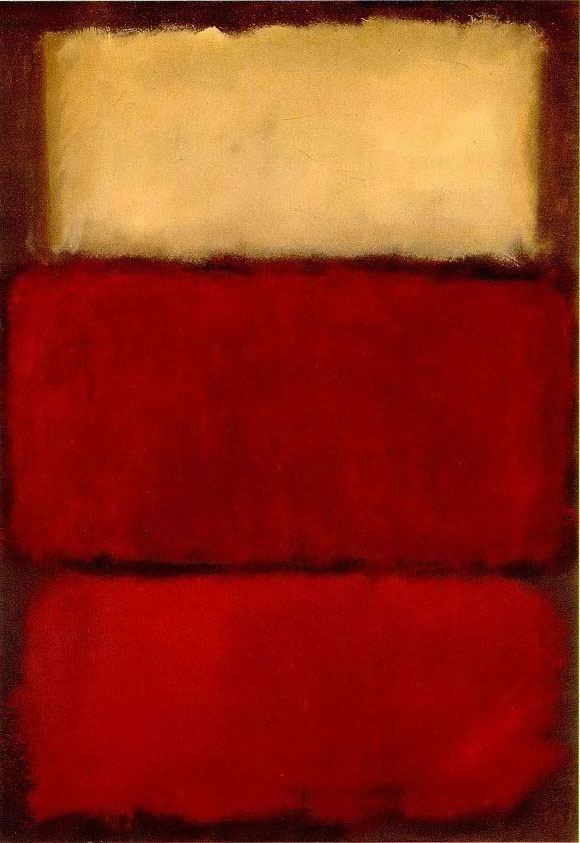

Formalism is a typically 20th Century development. It reacts against the idea of art as representation, as expression, or as a vehicle of truth or knowledge or moral betterment or social improvement. Formalists don’t deny that art is capable of doing these things, but they believe that the true purpose of art is subverted by its being made to do these things. "Art for art's sake, not art for life's sake" is the watchword of formalism. Art is there to be enjoyed for the perception and by means of its intricate and complex form. Formalism's right hand is aestheticism, which defends that the main function of art is to produce and elicit pleasure. It informs and instruct, represent and express, but first and foremost it must please.
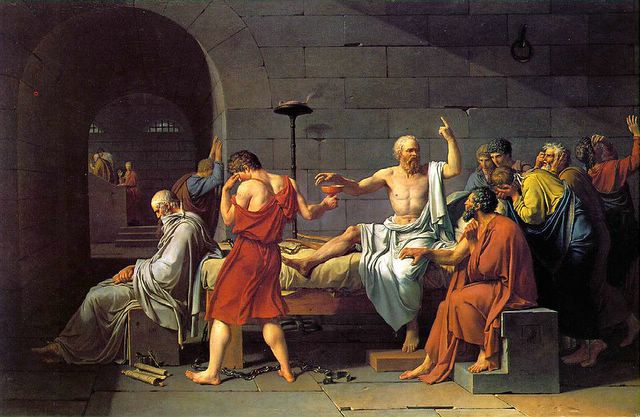
Many people believe that art as has a didactic function (to instill a positive influence, whether moral, social or political). Because art implants in people unconventional ideas; or breaks the molds of provincialism; or disturbs and disquiets (since it tends to emphasize individuality rather than conformity), art that does not promote a “positive” moral influence is received by the moralist with growing suspicion. For the moralist, art has the force to undermine beliefs and attitudes that are fundamental for his or her view of a good society.

The view of art as representation has been replaced by the idea of art as expression. The distinctive expressionist view of artistic creation is the product of the Romantic movement, according to which the creation of art is based on the expression of feelings. Instead of reflecting states of the external world, art is held to reflect the inner state of the artist. This, at least, seems to be implicit in the core meaning of "expression": the outer manifestation of an inner state.
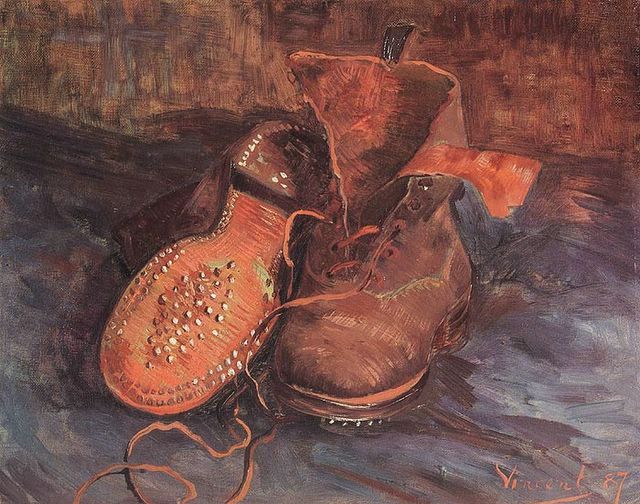
It's been said that art is a means to the acquisition of truth. Art has even been called the avenue to the highest knowledge available to man (and to a kind of knowledge impossible of attainment by any other means). Knowledge in the most usual sense of that word takes the form of a proposition, knowing that so-and-so is the case. Is knowledge acquired in this same sense from acquaintance with works of art? The question is whether there is anything that can be called truth or knowledge (presumably knowledge is of truths, or true propositions) that can be found in works of art.
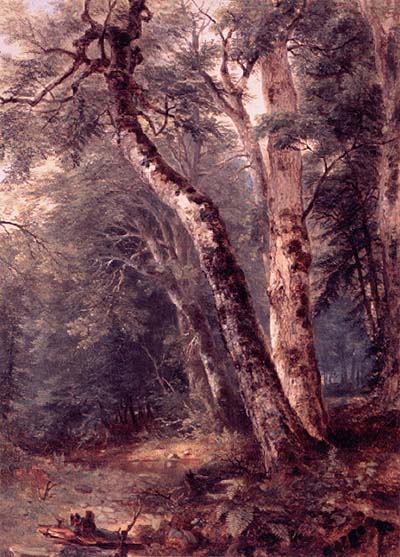
Art as imitation harks back to Plato. At some period in the history of art, people conceived art as if nature should be recorded by the artist with photographic fidelity. The invention of photography (which can do this better than any painter) could plausibly be said to have relieved the artist of any such responsibility.
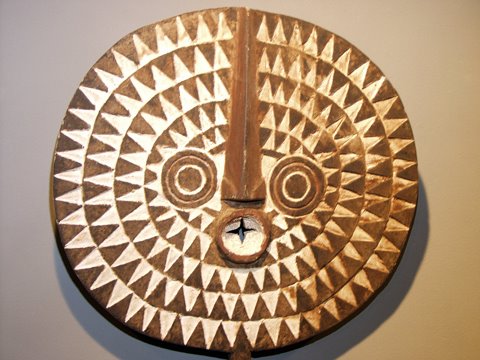
For some, art should be a repository for proverbial wisdom, ancient superstitions, sentimental themes, and religious beliefs. It should accompany and celebrates what is embedded in the lives of individuals and communities: baptisms, marriages, funerals, anniversaries, sowings, reapings, and the daily routine of work. Vernacular art becomes the soul of the people.
Subscribe to:
Posts (Atom)