Sunday, October 9, 2005


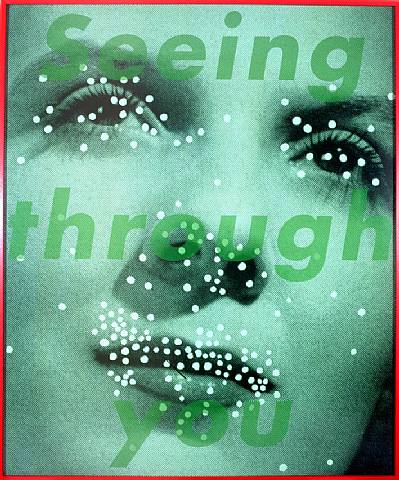
Barbara Kruger "Seeing Through You"

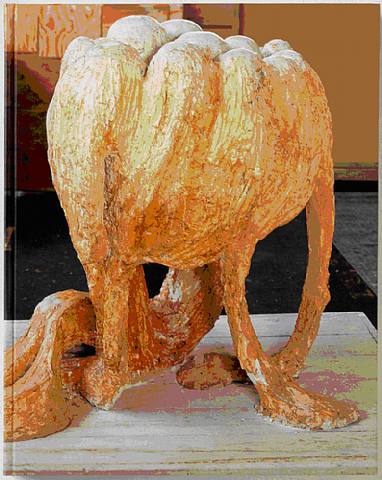
Louise Bourgeois "Untitled"

Female Art

Feminism is right about the suppression and dislocation of women from the public sphere since the Renaissance until the end of the Twentieth Century (just look at the disproportion of male and female artists in art history). The early avant-garde (Impressionism, Post-Impressionism, Fauvism, Expressionism, Futurism, De Stijl, etc) are essentially male-driven. Compare the number of male artists of renown with the handful of female artists of early and mid-20th Century, such as Natalja Goncharova, Sonia Delaunay and Hanna Höch and then Frida Kahlo and Georgia O’Keeffe. I don’t want to dwell in the causes of this phenomenon, which has been well-documented by Feminists such as Simone De Beauvoir in The Second Sex, Shulamith Firestone’s The Dialectics of Sex or Carol Gilligan’s In a Different Voice. Since the 1960’s women’s art has brought forth a new attention to materials: latex, rubber, fiberglass and yarn. There is a return to fiber media: weaving, quilts, etc. Formally, there’s a biomorphic, softer more fluid focus. In performance/art, women have explored gestures of objectification and exploitation which we don’t find in male performances (they tend to be more heroic). Art is universal, but the claim that art has no gender is a distortion of reality. In fact, the trained eye can tell the difference. These are some of the most important female artists working today.

Tuesday, October 4, 2005

Update

This week, artist Westen Charles is coming for a class presentation. Also, I sent an email with an easy homework for this Thursday; part of the same homework is to concoct a paragraph-comment for my shaman post.

Sunday, October 2, 2005


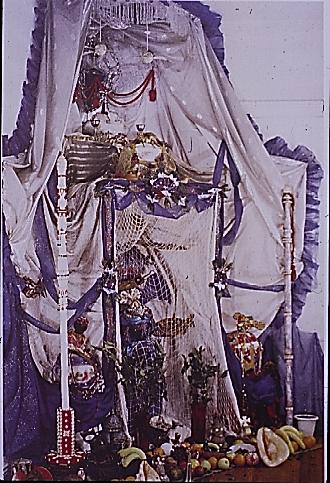
Yoruba altar (an installation?)

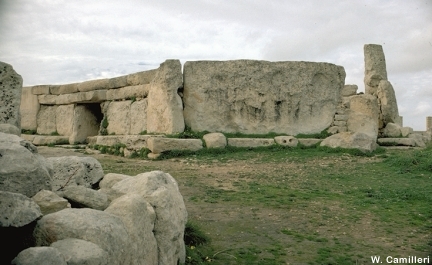
Neolithic altar in Malta (a predecessor of the white cube?)

Concocting a heeling beverage (a performance?)

The shaman (the artist)

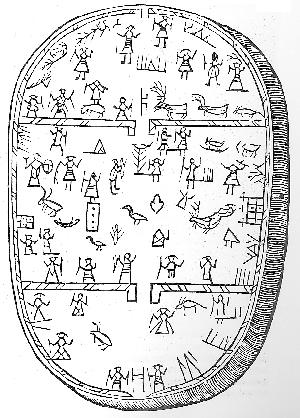
Drum skin diagram of the environment (Still life?)

Or as a mandala separating chaos from order.

As magic, inside the prehistoric cave.

The artist as shaman

Last Thursday I linked shamanism with artmaking. Shamanism is a highly stratified complex of practices going back to the Upper Paleolithic Period. These practices include the use of ecstasy, the belief in guardian spirits (who are often in animal form, with the function of helping and guiding the dead) and beliefs concerning metamorphosis and traveling to the beyond. In the rituals, the shaman uses different objects; some are natural, such as precious stones, bits of metal, teeth and claws of animals, bones, plants, and so on (sort of ready-mades). Then, there are man-made amulets, which include medallions, small figurines, carved knives, drums of all sizes, wheels and masks (see them as sculptures). They drive away evil spirits or serve as objects for invocation, divination and heeling. I showed some cosmological renditions, where male/female, day/night/, birth/death, animal/totem oppositions are clearly established. These diagrams are epistemological and aesthetic renditions of the universe. See the relation? Art is another symbolic condensation of our environments, a way to depict and evaluate the universe. Then there's the place of worship. I find a parallel between the altar and the artist's studio --or the white cube for that matter. These are the places of convocation and worship. Think of the most elementary site: a massive rock or a hilltop, with no accoutrements, to the Greek megaliths to the Hindu yupas to other sacrificial sites (whether hollowed out in the earth or raised or constructed on stone slabs resting horizontally on legs, columns, or lateral supports). The artist as Shaman: solving, expressing, and suggesting alternative codes to understand the universe. The tools: all the paraphernalia to execute the work. And the altar, the creative place.
Friday, September 30, 2005

Gean's presentation

Gean has this peculiar sort of introspected low-key style of chewing his thoughts, a kind of baroque provocation, at times tangential and often ending with a swift touché. Last night, I had a good time observing his interaction with the class. I perceived the whole gamut: some of you were irritated (or put off) by his delivery, interested but puzzled, totally disconected, and then some were able to score really the best points I've heard in a while. I don't know why, but the exchange stayed with me all night. Let's talk about it. Tell me what you think.

Wednesday, September 28, 2005

Tomorrow

Artist and critic Gean Moreno is coming to class tomorrow. Moreno is one of Miami's promising artists. He's also an experienced writer with articles in national magazines and abroad. I think he's showing a video and talking about a text he wrote for an upcoming show in Oslo (which I sent to you, via email, on Tuesday). It should be pretty interesting.

Art condenses the universe into symbols. How to figure out the right code?

Saturday, September 24, 2005


Colleen Dzwonek's "Still Life"

Giorgio Morandi's "Still Life"

Juan Gris' "Still Life w Violin"

Picasso's "Palette, Candlestick and Minotaur"

Braque's "Still Life w Violin"

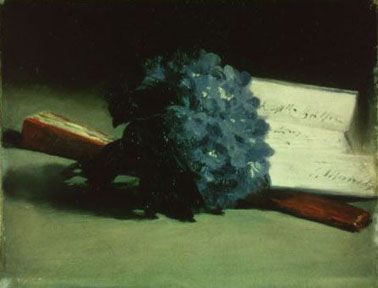
Eduard Manet's "Bouquet of Violets"

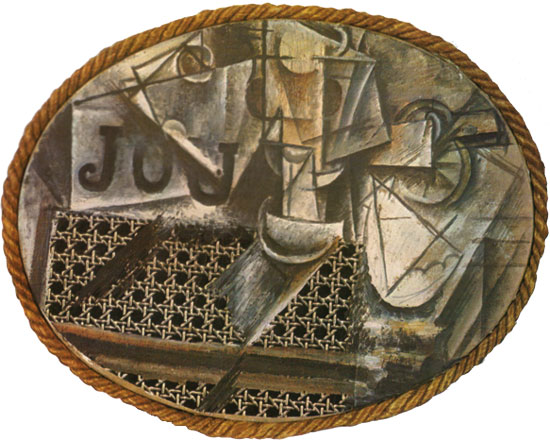
Picasso's "Chair Caning"

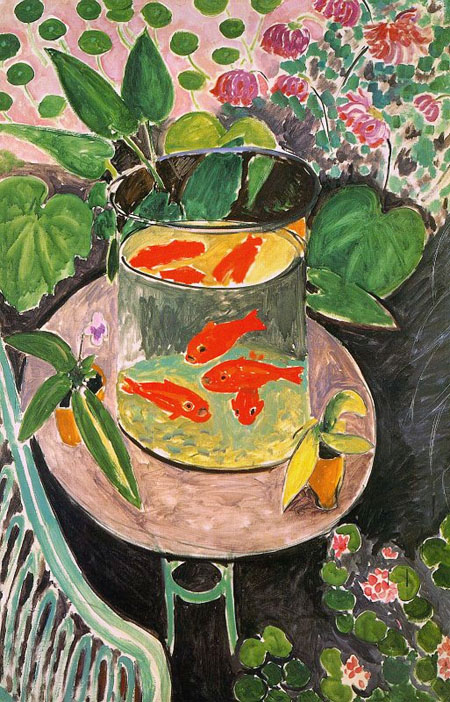
Matisse's "Gold Fish"

Van Gogh's "Shoes"

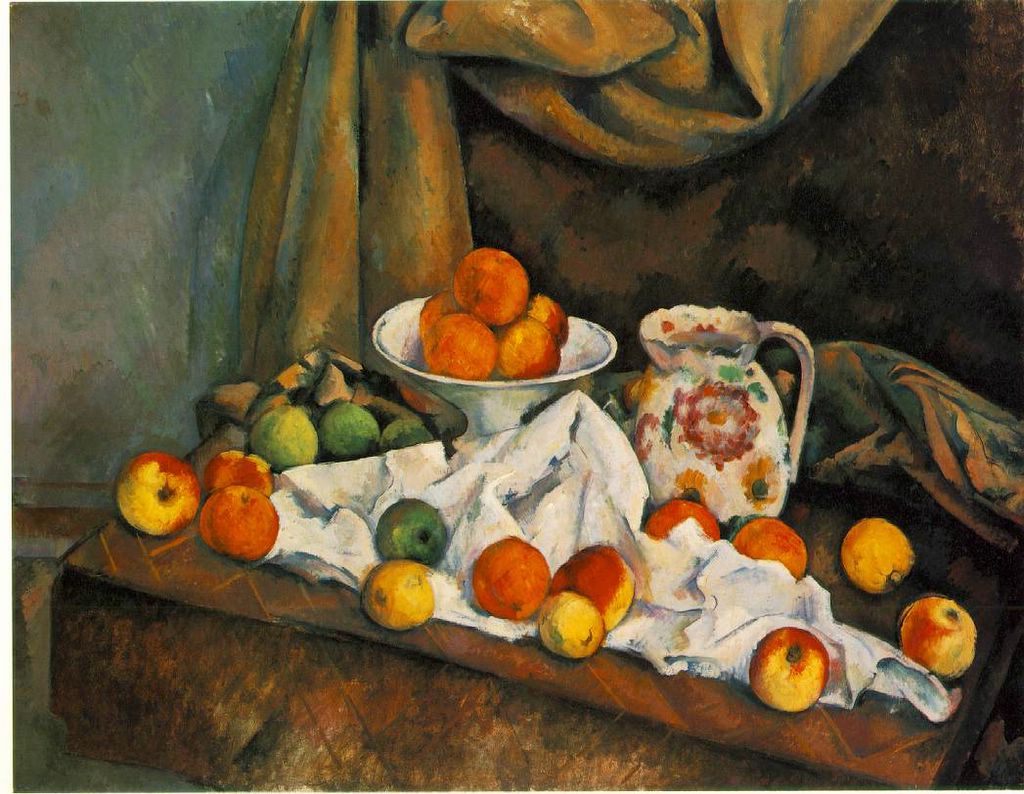
Cezanne's "Nature Mort"

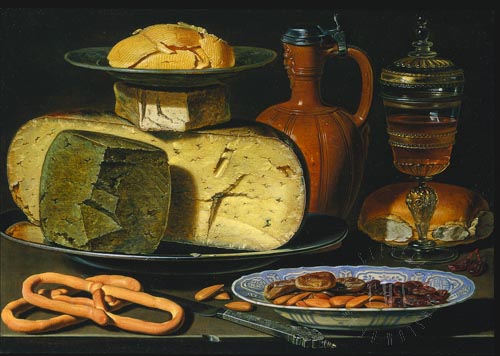
Clara Peters' "Still Life w Cheese"

Pieter Claesz's "Vanitas"

Still Life

Last class, I introduced this idea of reworking nature mort as a way to explore our personal environments. This is not faithful representation: it's more like recreation --even an idealization of what's most immediate and intimate. SL becomes different things for different people: a stage to make a point, to ponder something, even to persuade. So, for 17th-Century Dutch -great masters of the style- SL revealed a preoccupation with the epoch; whether a desire to make painting a participant in the scientific classification of insects, or to make art a moral arbiter (in the style known as vanitas). 17th-18th Century Spaniards used it to breach issues of class and tradition (as a didactic way to counter the appetite of the senses). 19th-Century Impressionists exploited SL as technical and formal: how to capture a fleeting moment as light reflects on different objects. For post-Impressionists SL offered a gamut of possibilities: Cezanne's apples work as a sort of Naturalistic manifesto, that is (in following Zola) how to reproduce "faithful perceptual reality." In Van Gogh's shoes we see a deep reflection on human existence (the shoes reveal what's not in the painting). During early 20th-Century, Picasso and Braque (at least during their Cubist phase) used nature mort as life’s most available and workable context. Juan Gris was also Cubist, but his still lifes are more the idealization of an imperfect reality. Finally, Morandi (perhaps the last Modern master of the genre) treats SL as his best account of an already shattered reality (life as andless recurrence through a movement of constant permutations).

Friday, September 23, 2005

Last night's presentation

Later I'll post something. In the meantime, what were your thoughts about Edwin Montalvo's presentation?

Wednesday, September 21, 2005

Update after "Rita"

Because of Rita, Maritza Molina had to cancel tomorrow. So, I'm trying to find somebody for the second half of our class. Saturday's post had a nice thread of comments. I'm glad you're participating. Remember it's part of the home work.
_________________________________________________________

Painter Edwin Montalvo is coming tomorrow. He's an art teacher and shows with the Kevin Bruk Gallery. Montalvo makes these anachronistic part 17th-Century Dutch paintings (that look as digitalized 20th-Century illustrations). It should be interesting. Then, après la classe, there's an art auction nearby. I'll let you know tomorrow in case you want to come.

Saturday, September 17, 2005

The body

The late Sixties was a period of change in America (a civil-rights revolution took place while fighting a war of attrition in Viet-Nam thousands of miles away). Pop Art, Conceptualism, and Minimalism had taken New York by storm. In the midst of this commotion, a group of young artists found that they could use their bodies as vehicles to express themselves. They borrowed from Jackson Pollock's heroic gestures, feminism, neo-Dada happenings, and avant-garde theater (such as Antonin Artaud's theater of cruelty). Their aim was to bring the human body to the center of the political, social, and artistic debates. They turned into painting bodies, (like in the works of Yves Klein or Jackson Pollock), gesturing bodies (in the actions of Bruce Nauman, Joan Jonas and Eleanor Antin, or transgressive bodies, (as in the rituals of Ana Mendieta, Hermann Nitsch and Chris Burden).

Marina Abramovic
_________________________________________
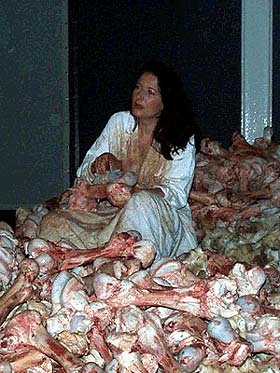
This piece, entitled Balkan Baroque won Abramovic a 1997 Venice Biennale Award. She spent four days cleaning 1,600 cattle bones while singing melodies from her mother country, Yugoslavia. Abramovic's performance happened during the war in Kosovo between Serbia and NATO.