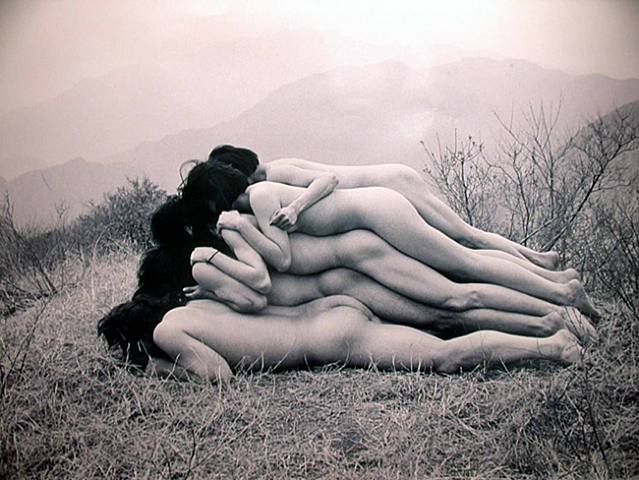
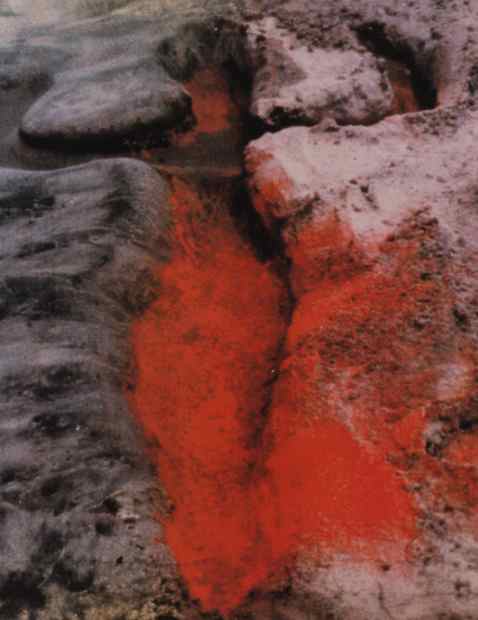
Ana Mendieta envisioned the female body as a primal source of life and sexuality, as a symbol of the ancient paleolithic goddesses. In her siluetas, Mendieta used her body or images of her body in combination with natural materials. Austrian artist
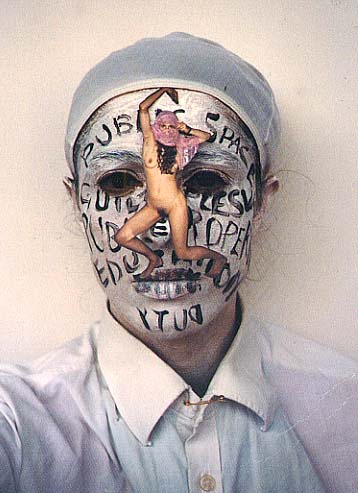
Valie Export has worked in film, video, photography, text and performance. Initially expanding the Actionist project to confront a complex feminist critique of the social and political body, her works achieve a compelling fusion of the visceral and the conceptual.
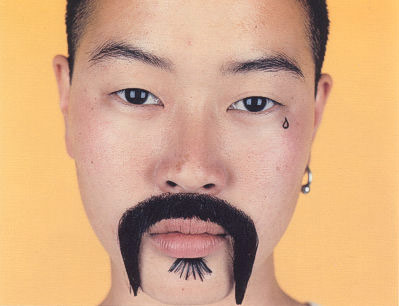
Catherine Opie gained national attention for her large format portraits of dyke daddies, gay male performance transvestites, FTM transexuals, tattooed and scarified gay men and lesbians and other members of a social milieu where sexual identity is most dramatically thrown into question. Opie places her subjects clearly and calmly in the center of focus.
Elke Krystufek’s art is about herself, her ego and her life. For ten years, her impertinent performances have exhibited a voyeuristic/exhibitionistic dynamic that dissolves the boundaries between public and private. British
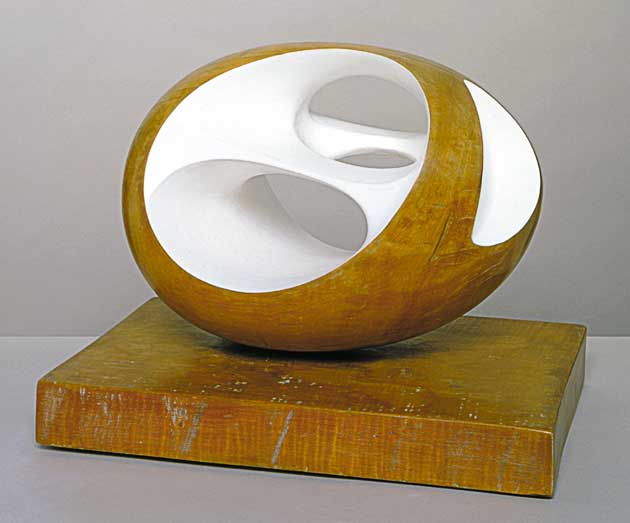
Hepworth’s adherence to abstraction was lifelong and drew on geometric as well as organic shapes. She introduced into England the idea of piercing the solid mass of sculpture with a "hole," making the object more transparent. This concept influenced the future work of Henry Moore, among others. Hepworth’s hollow interiors become more important than the enveloping material. As the viewer's eye is drawn inside the sculpture, the openings invite the surrounding landscape to become part of the artwork.
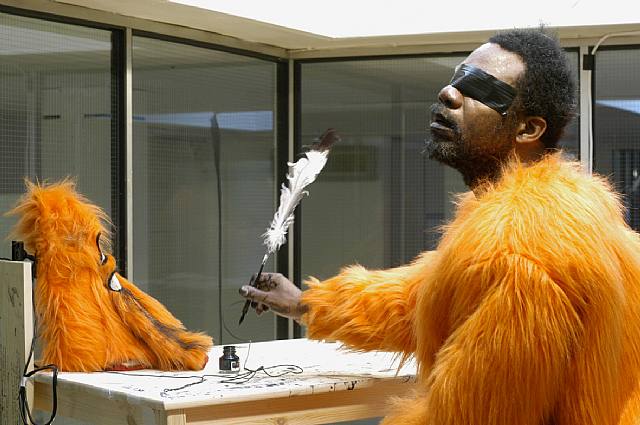
Adrian Piper is a conceptual artist (and philosophy professor) whose work, in a variety of media, has focused on racism, racial stereotyping and xenophobia.
Nan Goldin is an example of an artist who works at the most intimate level: her life is her work and her work, her life. Her "snapshot"-esque images of her friends -- drag queens, drug addicts, lovers and family -- are intense, searing portraits that, together, make a document of Goldin's life.
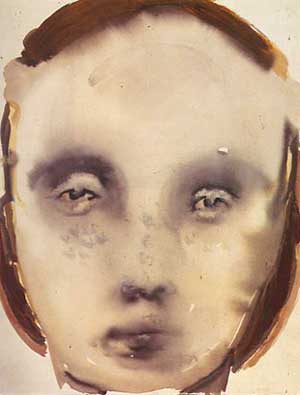
Marlene Dumas makes paintings with no concept of the taboo. Racism, sexuality, religion, motherhood and childhood are all presented with chilling honesty. Undermining universally held belief systems, Dumas corrupts the very way images are negotiated. Stripped of the niceties of moral consolation, Marlene Dumas’s work provokes unmitigated horror. Sarah Lucas often employs metaphors that represent or symbolise sexual body parts. These metaphors are frequently food or furniture which she utilises as ready-mades, attributing new meanings to them.
Silvie Fleury displays stylish items of fashion and design in order to compare and clash them with the everyday world. In a way, fashion is dissected from its aura and made banal.
Vanessa Beecroft has become famous for her human installations featuring armies of vaguely similar women (and lately men) wearing identical underwear, high heels, wigs, and not much else. Their nudity becomes almost like a uniform. She explores the intrusion of the public, Pop, fashion, conceptual art, and the body as object.
Rosemarie Trockel is one of the most important figures in the contemporary art movement in Germany. Trockel challenges established theories about sexuality, culture, and artistic production. In her "knitted paintings" Trockel designs patterns on a computer that are then produced by a knitting machine. Louise Nevelson’s wood assemblages typically painted in either jet black or – later- in white and gold, ranged in size from the small to the large and monumental, inviting viewers to observe a world into which they could not go but in which they often feared they had already been placed.
Eva Hesse was sent with her sister to Holland to flee the Nazis in 1938. Their parents joined them and they moved to New York in 1939. When Eva was nine, her parents separated and her father remarried. A few months later her mother, who had a history of depression, committed suicide by throwing herself from a window. Hesse used to say that she aimed to create ‘nothings’. One can create a ‘nothing’ by making things that aren’t things (in the sense fixed representative objects). And Hesse’s objects always do more than merely represent. If art is always made to mean things and to represent, the only way out is to make what Hesse called "non-art."
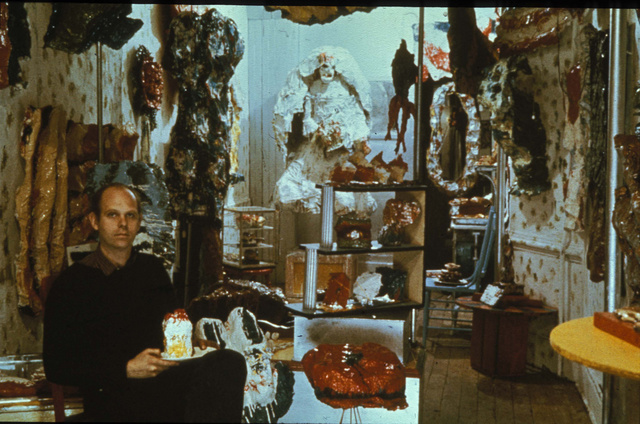
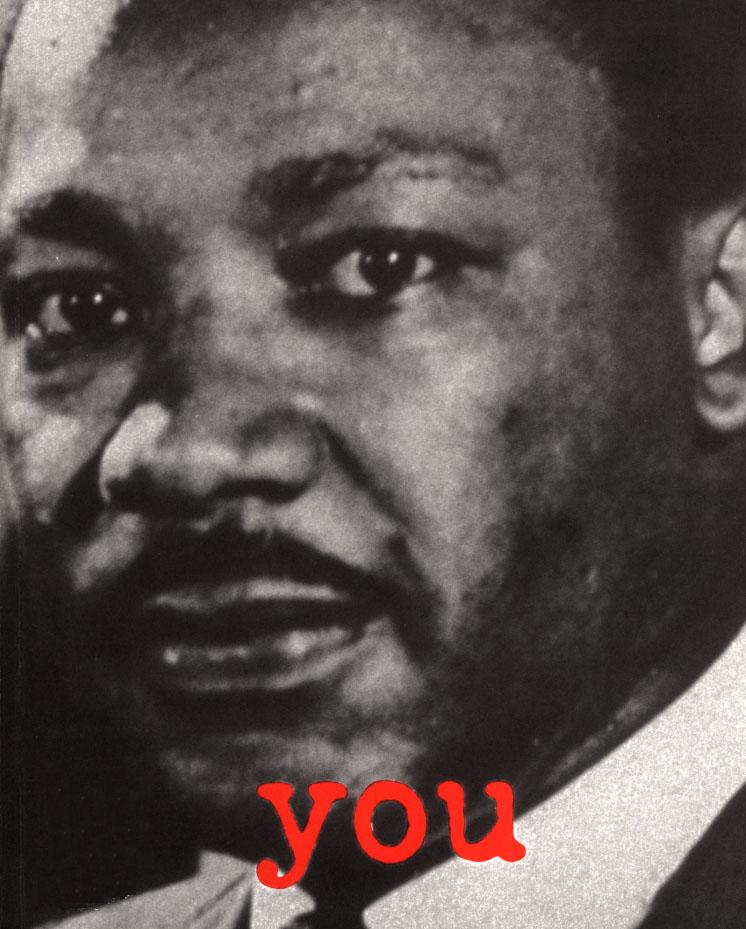
Louise Nevelson was one of the most important American sculptors of the twentieth century. Her wood assemblages typically painted in either jet black, white and gold, ranged in size from the small and personal to the large and monumental, inviting viewers to observe a world into which they could not go but in which they often feared they had already been placed. Barbara Kruger is internationally renowned for her signature black, white and red poster-style works of art that convey in-your-face messages on women's rights and issues of power.
Barbara Kruger knows how to capture our attention with her bold socio-political photomurals, displayed on billboards, bus stops and public transportation as well as in major museums and galleries wordwide. With
Louise Bourgeois' work, we are faced with the presence of subjects of desire. They may not be immediate figures of desire, but they position themselves clearly as “operations” of desire. Bourgeois' sculptures exhale the sweat of erotic work.